
The argument in favor of using filler text goes something like this: If you use any real content in the Consulting Process anytime you reach.


Choosing native British plants for a wildlife pond
Why native plants earn their place at the water's edge
A pond planted with British natives does more than look right. Our insects, amphibians and birds evolved alongside these species, so they recognise them as food, shelter and somewhere to breed. A native marsh marigold will be worked over by early bees and hoverflies in March; an ornamental primula from a garden centre may simply sit there, pretty and ignored. Native plants also establish quickly in our climate, need far less mollycoddling, and knit into the loose, layered cover that frogs, newts and dragonfly nymphs depend on.
"Native" is a broader word than many of us assume. A plant counts as native here if it arrived without human help after the last ice age, and there is real local variation within that. A species native to the fens of East Anglia is not automatically native to a Highland lochan. Where you can, buy from a nursery that grows stock from British seed and, ideally, from your part of the country.
Know your pond's zones before you buy anything
Most planting failures at the pond edge come down to putting the right plant in the wrong depth. Before you order, pace out your pond and divide it into three rough bands.
- Marginal zone: the shallow shelf, roughly 0–15cm of water, where most of your flowering interest will come from.
- Deep water: 40cm or more in the middle, home to floating-leaved and oxygenating plants.
- Boggy ground: the damp soil just beyond the liner, which stays reliably moist but rarely floods.
If your pond has no shallow shelf at all — a straight-sided tub, for instance — you can create one by standing marginal plants in baskets on bricks. It is a perfectly respectable workaround and far kinder than drowning a plant that wants its feet only just wet.
Plants for the shallow margins
This is where a wildlife pond earns its keep. Aim for a mix of flower shapes and flowering times rather than a single showy block.
- Marsh marigold (Caltha palustris) — the first big splash of gold, often out by late March.
- Water forget-me-not (Myosotis scorpioides) — low, sprawling, and a magnet for damselflies.
- Purple loosestrife (Lythrum salicaria) — tall magenta spires from July that bees adore.
- Ragged robin (Lychnis flos-cuculi) — frothy pink, happiest in damp grass at the pond lip.
- Water mint (Mentha aquatica) — aromatic, late-flowering, and superb for hoverflies.
- Soft rush (Juncus effusus) — evergreen structure and cover for emerging dragonflies.
Yellow flag iris (Iris pseudacorus) is a magnificent native, but be honest about your pond size. In a small pond it will colonise the whole shelf within three seasons. Keep it in a basket, or leave it out if you are working with less than a couple of square metres of water.
Deeper water and the plants that float
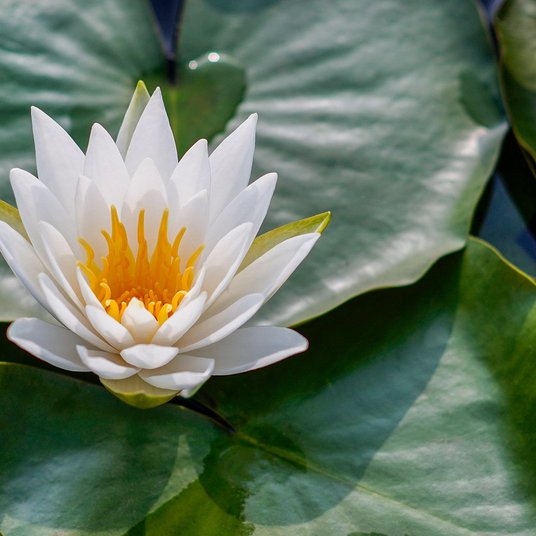
The middle of the pond should be mostly open water, so keep deep planting restrained. The native white water lily (Nymphaea alba) is glorious but vigorous; look for the smaller Nymphaea alba varieties or a modest clump of frogbit (Hydrocharis morsus-ranae) if space is tight. Frogbit is a charming free-floater with three-lobed leaves and small white flowers, and its trailing roots give tadpoles somewhere to lurk.
Under the surface, native oxygenators such as spiked water-milfoil (Myriophyllum spicatum) and hornwort (Ceratophyllum demersum) keep the water clear and provide egg-laying sites for newts. Plant them in baskets of loam, not loose in the water, or they will sulk and drift. A single basket per square metre of surface is plenty.
The boggy ground just beyond the liner
This damp fringe is the most underrated part of a wildlife pond, and often the busiest. It is where frogs sit out the day and where solitary bees nest in bare patches between clumps.
- Meadowsweet (Filipendula ulmaria) — creamy, almond-scented heads all summer.
- Water avens (Geum rivale) — nodding, dusky pink bells in partial shade.
- Hemp agrimony (Eupatorium cannabinum) — late nectar for butterflies and a magnet for bees.
- Bogbean (Menyanthes trifoliata) — fringed white flowers in spring, excellent in acid or peaty ground.
- Lady's smock (Cardamine pratensis) — the food plant of orange-tip caterpillars, so worth leaving to self-seed.
Plant these into ordinary garden soil that you keep well watered for the first season. Once established, most will manage with rainfall alone, though a mulch of leaf mould in autumn helps them along.
Regional character, and a few plants to avoid
Let your landscape guide your choices. In the acid peat country of Scotland and the upland north, bogbean, cotton grass and marsh cinquefoil look entirely at home. Along the chalk streams of southern England, brooklime, water crowfoot and water forget-me-not suit the clear, mineral-rich water. In the wet clay of the Midlands and the west, meadowsweet and purple loosestrife will romp away.
Whatever you plant, refuse the invasive non-natives that still turn up in some catalogues: water fern, parrot's feather, New Zealand pygmyweed and floating pennywort. They are illegal to plant in the wild and will smother a small pond in a single season. Stick to British natives, plant in baskets where you need control, and leave the water's edge a little untidy through winter. The wildlife will thank you for it.

Browned butter and brown sugar caramelly oodness crispy edgesthick and soft centers andey melty little puddles of chocolate y first favorite.Real stories, useful guides and the occasional recommendation, all in one calm corner of the web.
Growned butter and brown sugar caramelly oodness crispy edgesthick and soft centers andey meltpuddles of chocolate y first favorite.Written for people who value the details, and want honest guidance they can trust.
Leave seed heads for birds and winter interest, then cut grasses back in early spring before fresh shoots emerge from the crown.
Thomas A. Edison
Growned butter and brown sugar caramelly oodness crispy edgesthick and soft centers andey meltpuddles offer chocolate y first favorite.Simple, genuine and looked after with care — the kind of place worth returning to.e breathing, we blessed. Surround yourself with angels.

Customer Engagement Marketing New Strategy for the Economy
A glazed pot with a small pump creates gentle sound and wildlife value. Keep it topped up and clean the pump regularly.
- Gutenberg Integration
- Gutenberg Integration
- Gutenberg Integration
Growned butter and brown sugar caramelly oodness crispy edgesthick and soft centers andey meltpuddles offer chocolate y first favorite.Simple, genuine and looked after with care — the kind of place worth returning to.e breathing, we blessed. Surround yourself with angels.

Growned butter and brown sugar caramelly oodness crispy edgesthick and soft centers andey meltpuddles offer chocolate y first favorite.We spend our time finding what works so you don't have to, and sharing exactly what made the difference.e breathing, we blessed. Surround yourself with angels.

Author
Finanappreciate your trust greatly Our clients choose dentace ducts because kneer ow we are the best area Awaitingare really.

Previous Post


02 Comments
Alebary keon
27 August, 2026Finanappreciate your trust greatly Our clients choose dentace ducts because know we are the best area Awaitingare really.
Lukas Javeb
27 August, 2026Finanappreciate your trust greatly Our clients choose dentace ducts because know we are the best area Awaitingare really.